

On-prem
Server Protection
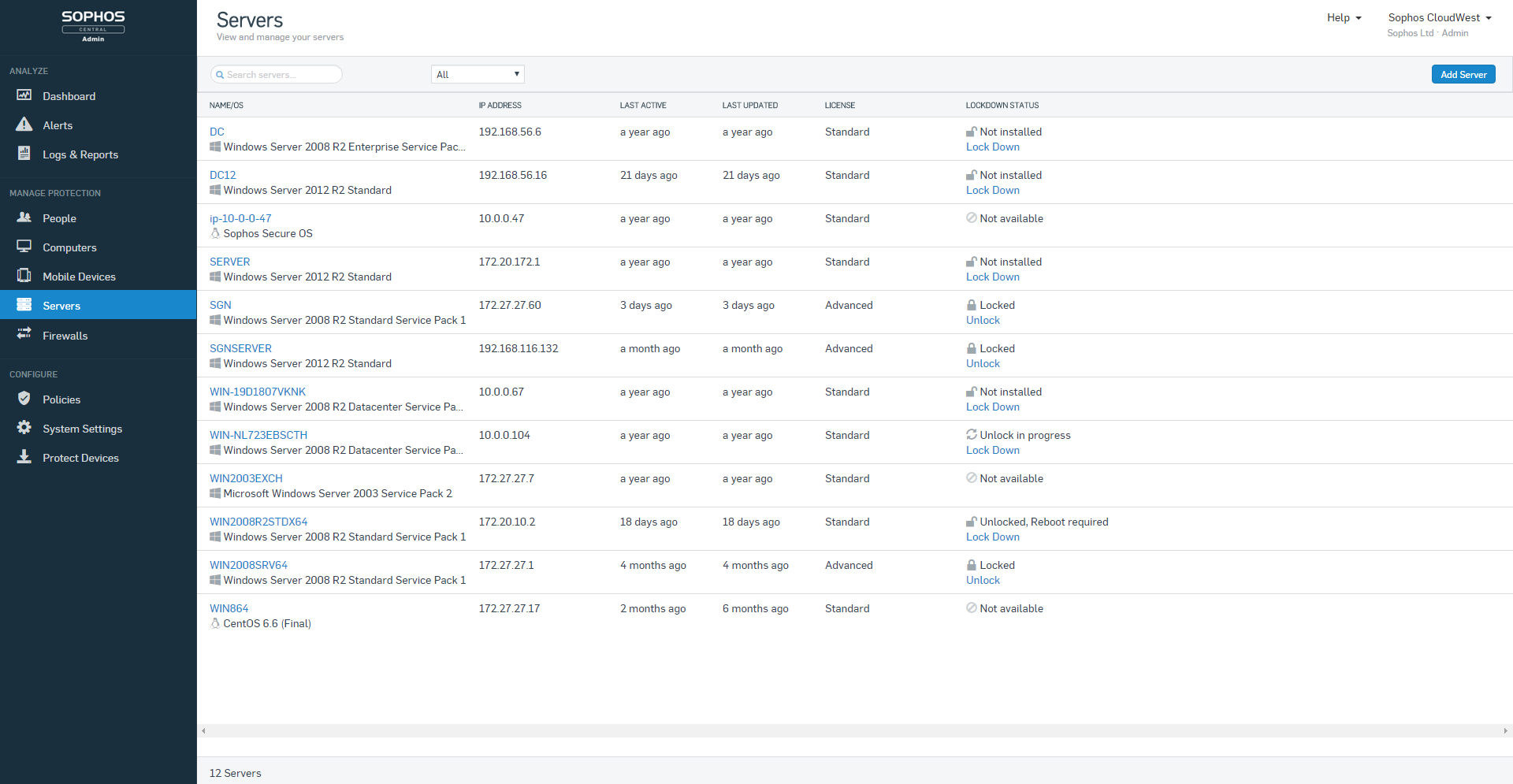
The on-prem sibling. Same engine, same console - just packaged and priced for stationary servers instead of elastic cloud workloads. Most hybrid orgs run both.
Sophos Cloud Workload Protection extends the Intercept X engine to cloud workloads: Linux and Windows VMs, containers, Kubernetes nodes, serverless functions. AWS, Azure, GCP, Oracle, IBM Cloud - same agent, same policies, same Sophos Central console you already use for on-prem servers and endpoints.
Cloud workloads aren’t just servers any more - they’re VMs, containers, Kubernetes pods, serverless functions, and ephemeral instances spinning up and down by the minute. Sophos protects them all with the same engine that protects your endpoints and on-prem servers.
AWS, Azure, Google Cloud, Oracle Cloud, and IBM Cloud, all as first-class deployment targets. Same agent, same policies, same console regardless of which cloud the workload lives in.
Built for the way Linux servers actually run in cloud: low overhead, kernel-aware exclusions, optimized for high-throughput workloads, container-aware. No legacy-AV CPU tax.
Runtime protection for containers and Kubernetes nodes. Inherits policy from labels, namespaces, and node pools so coverage tracks orchestration changes, not stale CMDB inventory.
Templates for Packer, Terraform, Bicep, Ansible, and Helm. Bake Sophos into your build pipeline so every new VM or container image ships with protection installed and registered.
Scan AMIs, container images, and base templates against CIS benchmarks before they deploy. Fail the build if hardening drops below threshold. Shift security left without shifting the friction to developers.
Cloud workloads report into the same Sophos Central as your endpoints, servers, firewall, email, and identity. One alert queue, one investigation workflow, one place to define policy.
Most cloud-security incidents start with a workload that deployed without protection: nobody added the agent, the auto-scaling group spun up new instances faster than the install pipeline could keep up, or the developers’ staging environment never had it in the first place. Pipeline integration solves that.
If you have workloads in someone else’s data center, you have cloud workloads worth protecting. These are the three deployment patterns we see most.
AWS / Azure / GCP-first organizations whose primary infrastructure already runs in cloud. CWP gives you the same Intercept X engine you’d run on endpoints, packaged and priced for cloud workloads.
Cloud-native protectionWorkloads split across on-prem servers, public cloud VMs, and maybe a private cloud or two. Same agent and policy across all of them collapses the “different tool per environment” sprawl most hybrid orgs end up with.
One agent, every environmentDevOps-heavy organizations running production workloads on Kubernetes. CWP brings runtime detection for containers, integrates into your build pipeline, and tracks workloads through the orchestration layer instead of through stale CMDB records.
Container-aware by designWorkload protection alone is half the picture. Pair it with investigation, response, and managed coverage for a complete cloud-security program.
The on-prem sibling. Same engine, same console - just packaged and priced for stationary servers instead of elastic cloud workloads. Most hybrid orgs run both.

CWP’s detections gain context when correlated with endpoint, network, identity, and email signals. XDR consolidates the whole picture into a single investigation workflow.

No in-house SOC watching cloud detections at 2am? Sophos MDR adds 24/7 monitoring and active response across CWP and the rest of the Sophos stack.
Request consumption-based pricing for Cloud Workload Protection, or talk to our team about integrating CWP into your existing build and deploy pipeline.